
Pinces à épiler les plus vendues




Vente
$76.00
$65.00







Vente
$32.00
$16.00
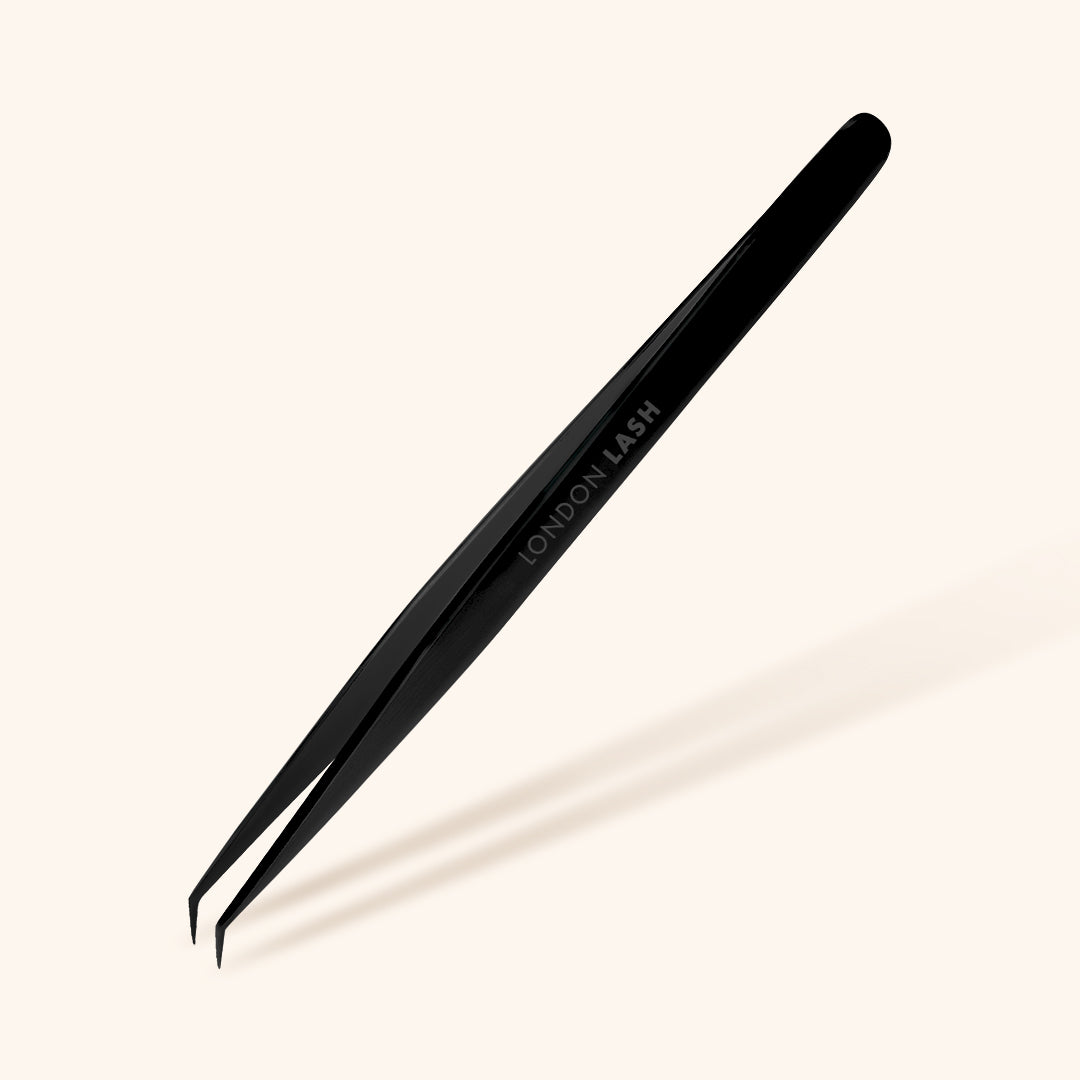
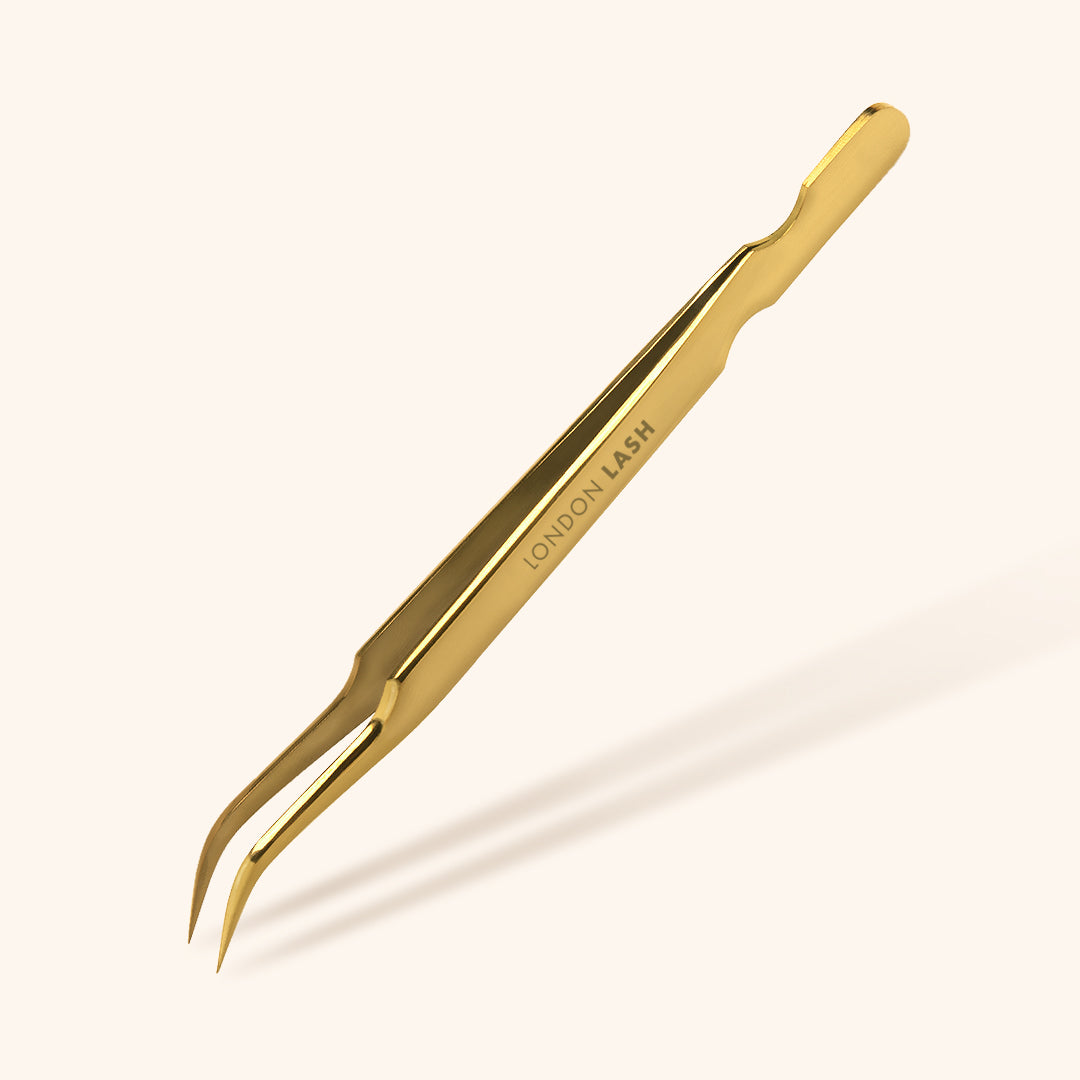
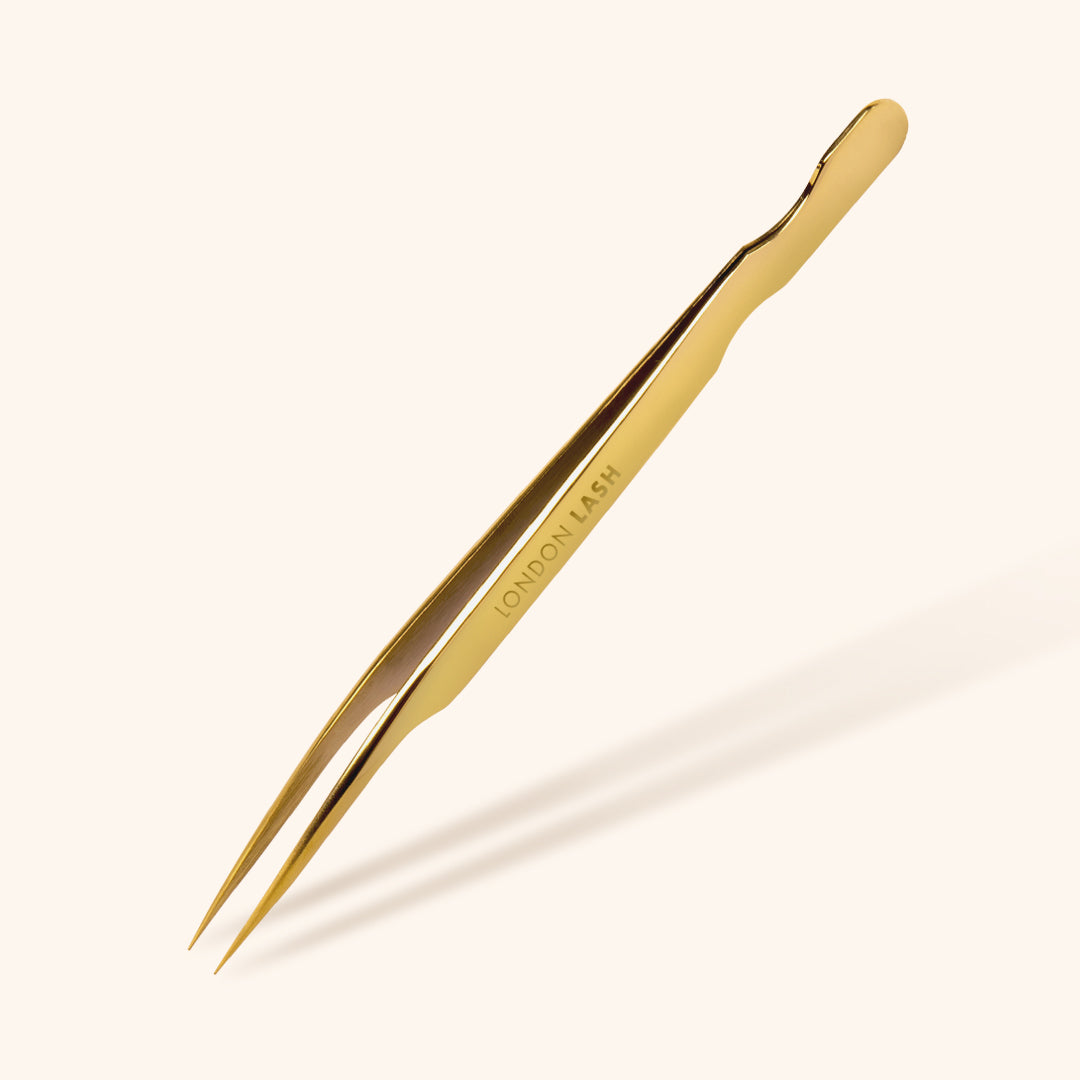
Clean isolation, reliable pickup, and precise fan placement start with the right tools. Our collection of best-selling lash tweezers brings together hand-tested instruments for professional lash artists. Choose from fine-point isolation tweezers, angled tools for classic pickup, and hex-textured fiber-tip tweezers designed to grip fine extensions during volume work.
Experienced master lash stylists test each pair by hand before shipping to check tip alignment and grip.
Tweezer Geometry for Isolation, Classic Pickup, and Volume
Match the tip shape and tension to the work you do most often.
| Profile | Featured Models | Tip Geometry | Recommended Use |
|---|---|---|---|
| Precision Isolation | Pointed Isolation Tweezers Curved Isolation Tweezers |
Slender, fine tips with light tension for controlled separation. | Isolating fine natural lashes in dense layers and reaching the inner and outer corners. |
| Classic and 1:1 Pickup | Multifunctional Tweezers Fine Tip Fiber Tip Tweezers |
Angled tips that keep the natural lash base visible during pickup and placement. | Classic 1:1 placement, hybrid sets, and separating stickies. |
| Volume and Mega Volume | Regular Tip Volume Tweezers (L-shaped) Fine Tip Volume Tweezers (boot tip) Fiber Tip Volume Tweezers |
Broader contact surfaces for gripping, pinching, and rolling multiple extensions. | Building handmade fans and placing Russian volume or mega-volume sets. |
Traditional Sweet Spots and Full-Surface Fiber-Tip Grip
- Traditional sweet spot. Smooth-tip volume tweezers typically have a small area where the tips meet most evenly. Find that contact point before you start fanning to help keep the extensions from twisting or slipping during pickup.
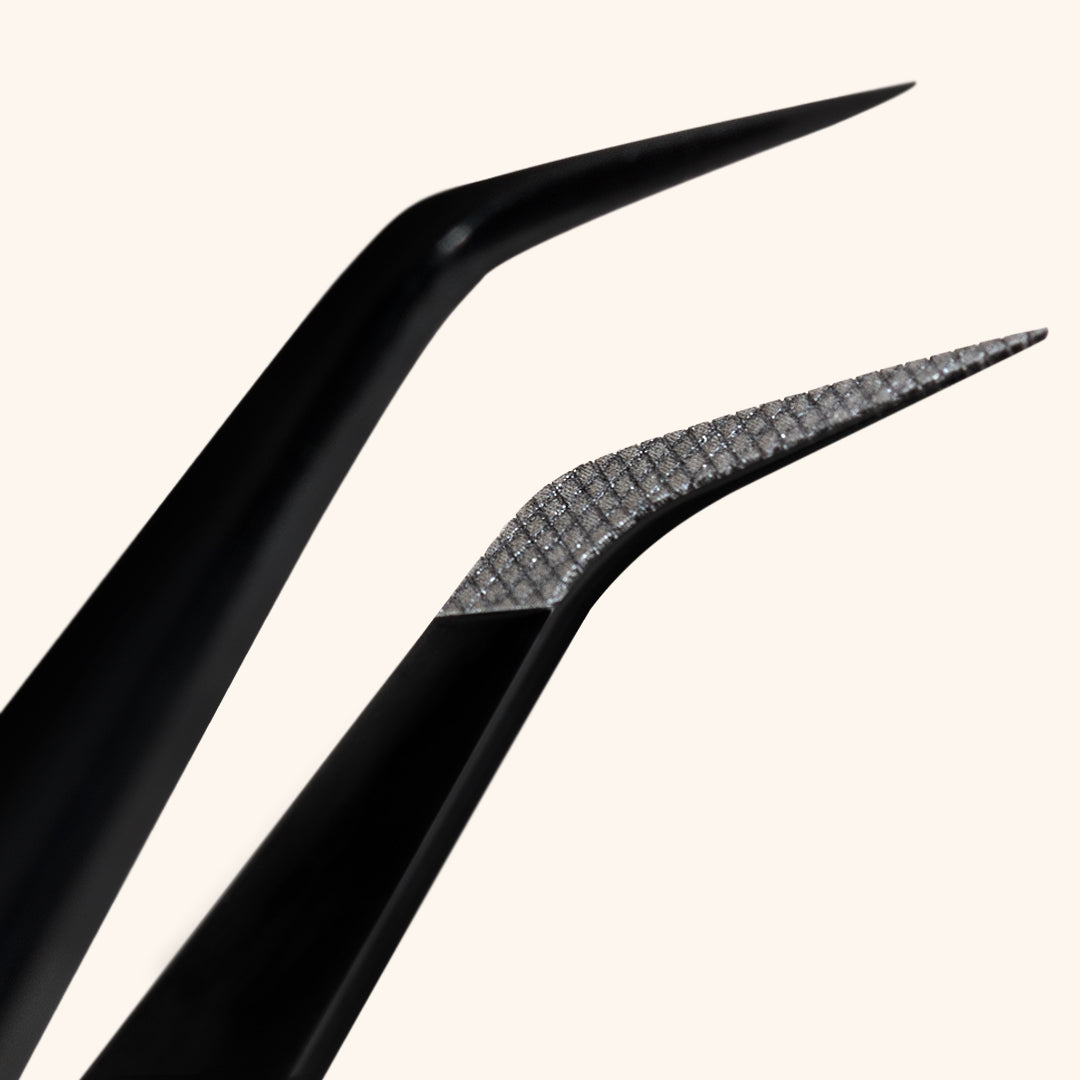
- Fiber-tip grip. A fine hexagonal texture across the inner contact surface gives you a wider area to grip extensions. This can make it easier to pick up fine fibers, including 0.03 mm and 0.05 mm lashes, with lighter finger pressure.
Matching Your Tweezers to Your Technique
- Pinching. A compact boot tip, such as the Fine Tip Volume Tweezers, gives you a short contact surface for controlling the fan base as you pinch it together.
- On-the-strip rolling or the lonely fan method. An L-shaped tool, such as the Regular Tip Volume Tweezers, gives you a longer, flat contact surface for spreading extensions on the strip.
- Classic 1:1 application. A light-tension tool such as our Multifunctional Eyelash Extension Tweezers can make repeated pickup and placement more comfortable during a full classic set.
- Inner and outer corners. Curved isolation tweezers give you clearance around the eye and can help you maintain a comfortable hand angle when separating hard-to-reach lashes.
Tweezer Care, Disinfection, and Storage
- Remove adhesive residue. Use a dedicated tweezer glue remover according to its instructions. Scraping cured adhesive with another metal tool can scratch the contact surface or affect tip alignment.
- Clean and disinfect between clients. Remove visible residue first, then follow the care instructions for your specific model and your local sanitation requirements. Use an autoclave only if the manufacturer confirms that the model is compatible with the cycle.
- Protect the tips. A drop can bend fine tips or shift their alignment. Once your tweezers are clean and dry, store them in a protective case or holder. Use silicone tip guards if they fit without pressing the tips out of alignment.
Frequently Asked Questions
What are the best tweezers for lash extensions?
Choose a pair that feels balanced in your hand and matches your technique. Fine-point or curved tweezers work well for isolation. Angled tips help with classic pickup, while boot-tip and L-shaped fiber-tip tweezers offer a broader grip for handmade volume fans.
What should I look for in professional eyelash extension tweezers?
Look for consistent tip alignment, comfortable tension, and a grip that holds the lash diameters you use most often. For volume work, test whether you can pick up and move a fan without the base shifting. Check the manufacturer’s care instructions if your salon uses an autoclave.
Which is better, C curl or D curl?
C curl gives a softer lift, while D curl creates a more pronounced curve. Choose based on your client’s natural lash direction, the look they want, and how securely the extension can sit against the natural lash.
Which brand is best for lash extension tools?
Look for a brand that offers tools for the techniques you use and provides clear care instructions. London Lash offers hand-tested tweezers for isolation, classic pickup, and volume fanning, so you can choose a tip shape and tension that suit your work.
