A Lash Tech’s Guide to Tweezers: The Best Lash Tweezers for Every Need


Table of Contents
The Best Lash Tweezers: A Guide to Isolation, Classic, Volume and Mega Volume
The best lash tweezers are the ones that suit your technique, give you a dependable grip, and feel comfortable throughout an appointment. A pair your favorite Lash Artist loves might not feel right in your hand—and that’s completely normal!
With straight, curved, angled, boot-shaped, and fiber-tip options available, knowing where to start can feel overwhelming. The easiest approach is to choose according to the task: isolating natural lashes, picking up Classic extensions, or creating and placing Volume fans.
This guide explains the main tweezer shapes, how to find their grip point, and what to check when a pair isn’t performing as expected.

Which Lash Tweezers Do You Need?
During professional extension application, technicians generally work with two tweezers: one to isolate a natural lash and another to pick up and attach the extension or fan.
| Task | Options to Consider | What Matters Most |
|---|---|---|
| Isolation | Straight, angled, pointed, or curved isolation tweezers. | Clear visibility, precise separation, comfortable reach, and controlled movement. |
| Classic Pickup | Suitable isolation-style or multifunctional tweezers. | A reliable grip on a single extension without excessive pressure. |
| Volume Fanning | Fine-tip, regular-tip, boot-shaped, or other purpose-designed Volume tweezers. | A grip area that supports the fan and works with your fanning method. |
| Mega Volume | Suitable slim, wide-tip, or ultra-fine Mega Volume tweezers. | Consistent control of finer fibers and the fan sizes you are trained to create. |
Browse our lash tweezer collection to compare the available shapes. Product names are useful starting points, but the specific design and grip matter more than the label alone.
The Best Tweezers for Lash Isolation
Isolation tweezers help you separate one natural lash from its neighbors before attaching an extension. Choose a shape that lets you see the working area clearly and maintain comfortable control.
Straight Isolation Tweezers
Straight tweezers have a narrow, direct profile. They can suit technicians who prefer a straightforward approach to the lash line and feel comfortable working with this shape.
Check whether the length and tip profile give you enough visibility without needing to hold your wrist at an awkward angle.
Angled and Pointed Isolation Tweezers
An angled tip changes the direction of approach, which some technicians find easier when reaching different sections of the lash line. Pointed isolation designs offer another variation in tip shape and access.
Compare the actual angle and length rather than assuming all angled tweezers will feel the same. Small differences can change how comfortably you reach the inner and outer corners.

Curved Isolation Tweezers
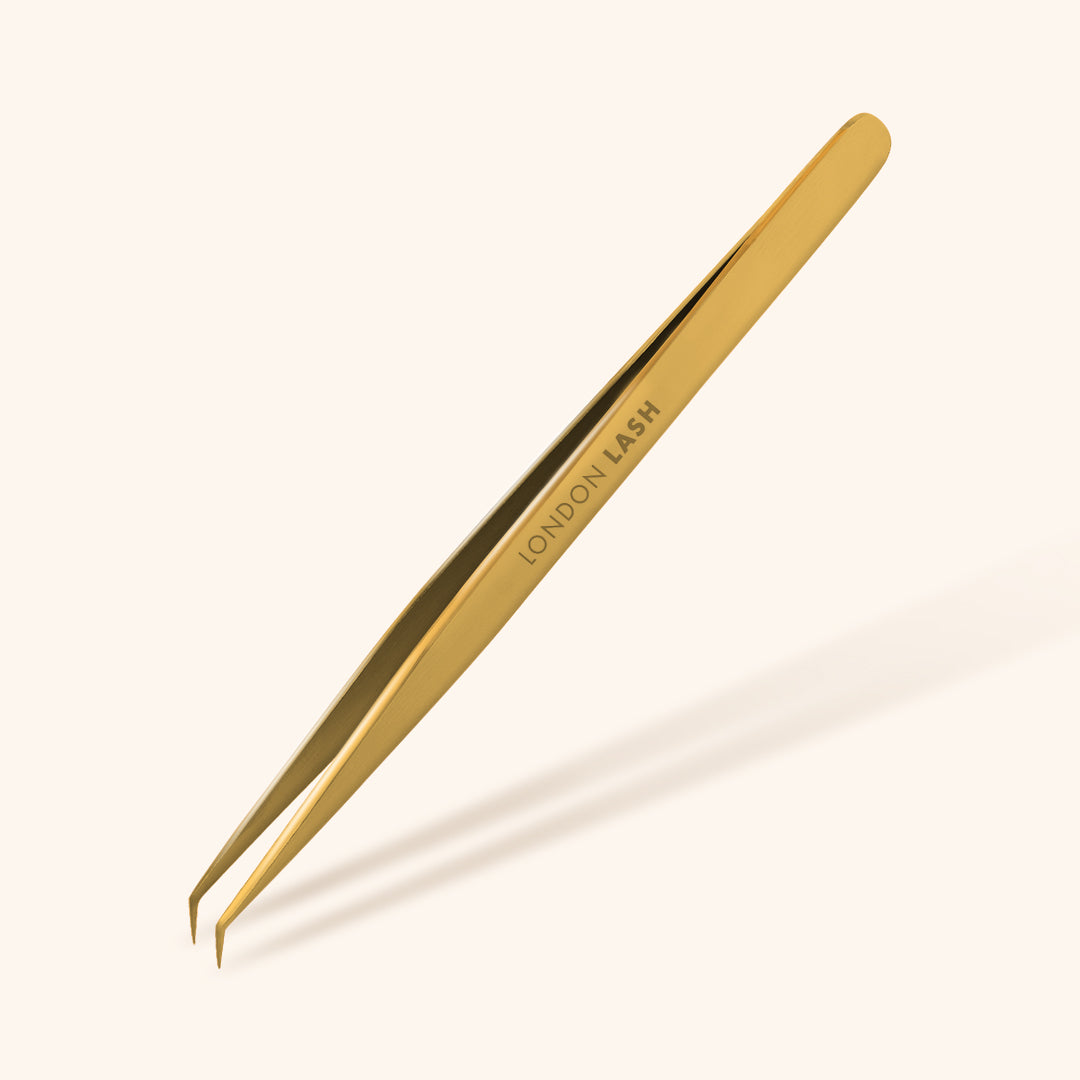
Curved isolation tweezers offer a different approach to the lash line, which can help some technicians maintain a more comfortable hand position. They are a popular option for isolation and may also work well for picking up individual Classic extensions.
A curved silhouette doesn’t automatically make a tweezer suitable for Volume fanning. Some curved tools are designed primarily for isolation, while others have a gripping surface intended for fans.
The Best Tweezers for Classic Lash Extensions
For a Classic lash set, your pickup tweezer needs to hold one extension securely and allow controlled placement.
Straight, angled, curved, and multifunctional designs can all be options, depending on the individual tool and your preferred grip. You don’t necessarily need a bulky boot to handle a single extension.
When testing Classic pickup tweezers, check that you can:
- Pick up an extension consistently from the strip.
- Maintain its direction while moving toward the natural lash.
- Release it smoothly after attachment.
- Work without squeezing harder than necessary.
Where Do Multifunctional Tweezers Fit In?
Multifunctional tweezers can be useful for Classic pickup and, where the particular model supports it, selected fanning techniques. Some technicians also find them useful for isolation.
However, “multifunctional” does not mean suitable for every fan size or method. Check the product’s intended uses and test it with the extensions you work with rather than relying on a universal 2D or 3D limit.

The Best Tweezers for Volume Lashes
Volume tweezers need to grip several fine fibers together while you create, pick up, and attach the fan. The contact area inside the tips is particularly important.
Fine-Tip Volume Tweezers
A finer tip can give you more visibility around shorter extensions and smaller working areas. Some technicians prefer this profile because it occupies less space around the fan.
Precision still depends on the alignment, grip point, and how you hold the tool. A fine tip alone doesn’t guarantee that every fan will stay together.
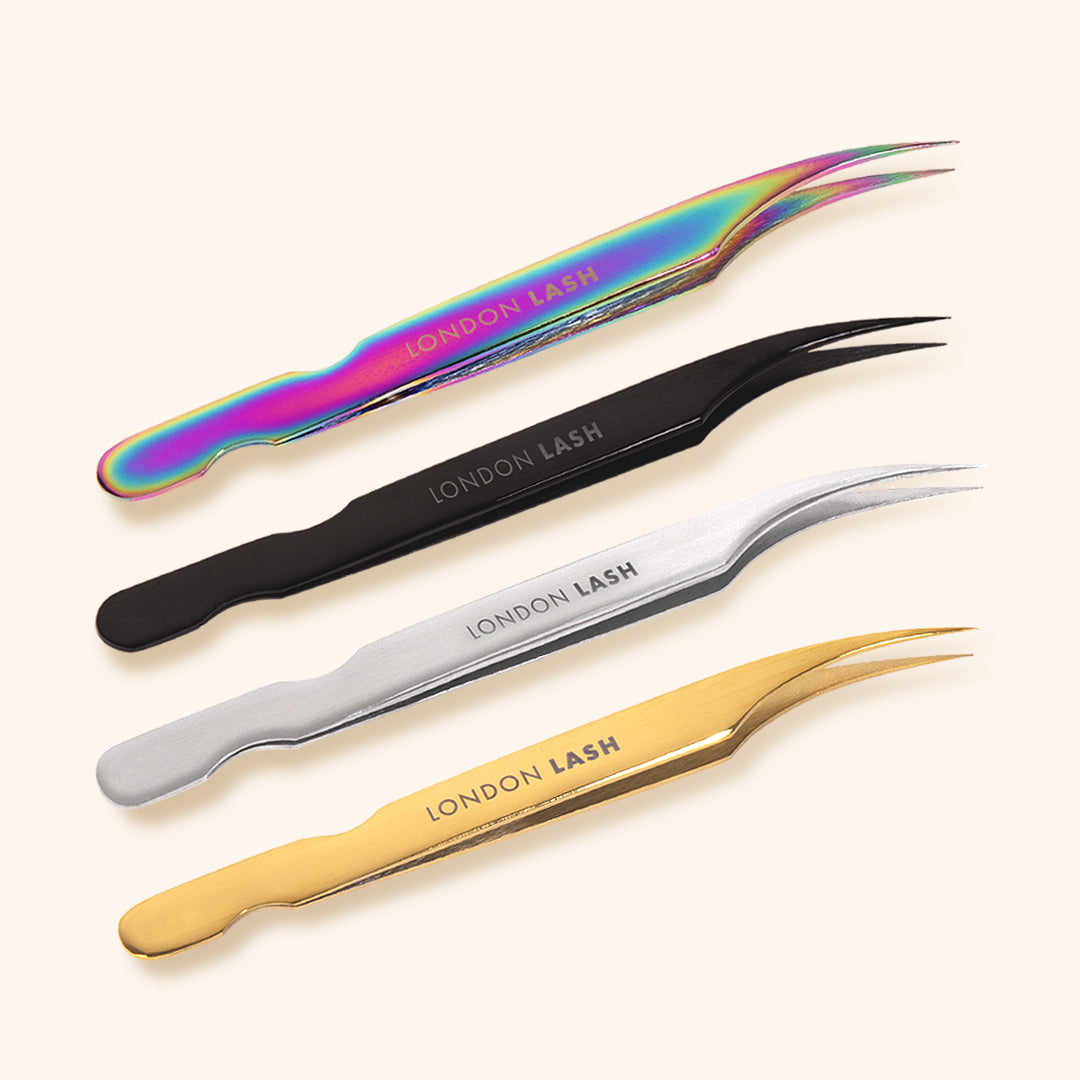
Regular-Tip and Boot-Shaped Volume Tweezers
A broader boot provides a different gripping surface and can offer support across more of the fan’s body. This shape may suit technicians who like the control of an angled foot when working on the strip or using another trained fanning method.
Compare the boot width, angle, and contact area. A wider foot isn’t automatically better if it obscures your view or feels awkward with your technique.

The Best Tweezers for Mega Volume Lashes
Mega Volume work involves handling particularly fine extensions, so consistent grip and controlled release are important. Choose a tweezer designed for the fan construction and method you use.
- Long, slim designs: An angled, narrow tip may suit technicians who prefer a slimmer profile for their fanning method.
- Wide-tip designs: A broader boot offers a larger working surface for technicians who like this style of grip.
- Ultra-fine designs: A small, precise tip may provide the visibility and control some technicians prefer when manipulating fine fibers.
Our Wide Tip Mega Volume Tweezers are one option for artists who prefer a boot-style tool.
Remember that a tweezer’s ability to pick up a large fan does not determine whether that fan is appropriate for a client. Fan weight and suitability must be assessed separately.

Fiber-Tip vs. Smooth-Tip Tweezers
Fiber-tip tweezers have a textured gripping surface inside the tips. Smooth-tip tweezers have a smoother contact surface. Both can be useful, depending on your technique and preferences.
Some technicians find that a textured surface helps them maintain their grip on fine fibers. Others prefer the feel and release of a smooth tip.
Texture doesn’t replace correct pickup position or controlled pressure. It also doesn’t mean you should squeeze harder. Test the tool with your usual extensions and adjust your grip gradually.

How to Find Your Tweezer’s Sweet Spot
The “sweet spot” is the area of the tips where a particular pair gives you its most dependable grip. It may sit in a slightly different position from the grip point on your previous pair.
- Start with clean tips: Adhesive residue can prevent the contact surfaces from meeting properly.
- Use your usual extensions: Test with the lengths and diameters you actually work with.
- Adjust the pickup position: Move slightly along the gripping area to find where the fibers stay supported.
- Check pressure: Use enough to hold the extension or fan without unnecessarily crushing or distorting it.
- Test movement and release: A successful pickup should remain controlled as you move and release the lashes.
Practice away from the client before introducing an unfamiliar pair into a treatment. This gives you time to understand how the tool behaves without rushing.
Why Are My Tweezers Dropping Lashes or Fans?
Before deciding a pair is unsuitable, work through a few checks:
- Residue: Is dried adhesive preventing the tips from closing correctly?
- Pickup position: Are the fibers sitting within the tool’s effective grip area?
- Pressure: Are you squeezing too lightly, too firmly, or inconsistently?
- Tool choice: Is the tip designed for your fan size and method?
- Damage: Have the tips become bent or misaligned after a drop or impact?
If the tool still doesn’t perform as expected, contact the supplier with details of the issue and the technique you’re using. Avoid trying to bend or file the tips yourself, as this can change the alignment and grip.
What to Check Before Buying Lash Tweezers
Recommendations are helpful, but your working method should guide the final choice. Consider:
- Intended task: Isolation, Classic pickup, Volume, or Mega Volume.
- Tip shape and visibility: Can you see the attachment area without changing your posture awkwardly?
- Tension: Does the tool close with a comfortable, controlled amount of pressure?
- Grip: Does the contact surface support the extensions you use?
- Length and balance: Does the tweezer feel stable in your usual hand position?
- Care instructions: Are the materials and finish compatible with your required cleaning process?
- Supplier support: Can you get help if the tool arrives damaged or doesn’t perform as expected?
Check the current product description for testing information and intended uses. Quality-control processes and specifications can differ between ranges, so avoid assuming every model is tested in exactly the same way.
How to Look After Lash Tweezers
Remove Adhesive Residue Carefully
Glue on the tips doesn’t automatically mean the tweezers are ruined. Use a compatible product such as our Glue Remover for Tweezers, following its directions and the tool manufacturer’s guidance.
Avoid scraping, forcing the tips apart, or using abrasive methods that could damage the gripping surface. Adhesive removal is not a substitute for the cleaning and disinfection process required between clients.

Follow the Correct Cleaning Process
Follow the manufacturer’s instructions for the tweezers and cleaning products, together with the hygiene requirements applicable to your salon. Don’t assume every coating or finish is compatible with every chemical or heat-treatment method.
Observe the specified product concentration and contact time, and complete any required rinsing and drying before storage.
Protect the Tips During Storage
Keep cleaned, dry tweezers protected from knocks and contamination. A suitable magnetic tweezer case can help protect the tips between uses.
A lash tweezer holder can help organize your workstation, but it should be kept clean and used within your salon’s hygiene routine. Avoid balancing tweezers where they can fall or leaving them loose beneath other supplies.
Frequently Asked Questions
What Are the Best Lash Tweezers for Beginners?
Start with suitable isolation tweezers and a pickup pair recommended for the technique you’re learning. Comfort, visibility, and dependable grip matter more than choosing the most specialized-looking shape.
Can You Use the Same Tweezer Shape for Isolation and Classic Pickup?
Yes, some shapes can perform either task. During application, you still need separate tools working together: one for isolation and one for pickup and placement.
Can Curved Tweezers Make Volume Fans?
Some can, but it depends on the individual design. A curved isolation tweezer does not automatically have the contact area needed for your Volume method. Choose according to the tool’s intended use and how it performs with your extensions.
Are Fiber-Tip Tweezers Better?
They may suit your grip and technique, but they aren’t universally better. Compare textured and smooth tips using the same extensions and fanning method to see which gives you more consistent control.
Do I Need Different Tweezers for Premade Fans?
You need a tool that supports the fan securely during pickup and attachment. Suitable Volume tweezers may work well, but check the fan manufacturer’s pickup instructions and test your preferred shape.
Should I Keep Spare Tweezers?
Keeping a suitable spare pair is practical, particularly for the tools you depend on throughout the day. Familiarize yourself with the spare’s grip before you need it during an appointment.
Find the Pair That Works with Your Technique
The right lash tweezers should feel like a dependable part of your routine. Choose for the task, learn the grip point, and give yourself time to adjust to a new pair.
Explore our professional lash tweezers to compare isolation, Classic pickup, Volume, and Mega Volume options.
Check out these featured products