
Is Latex-Free Lash Glue The Best?

Table of Contents
Latex-Free Glue for Eyelash Extensions: What Lash Artists Need to Know
Latex-free lash glue is an adhesive formulated without latex. However, latex-free does not mean allergy-free, and professional eyelash extension glue is different from strip lash adhesive. Always check the specific product’s ingredient information and instructions before choosing it for a treatment.
We get it, finding the perfect lash glue for you and your clients is difficult. It’s a task in itself! And there are sooo many to choose from. You might be asking yourself, “Where do I even start?” Don’t panic, we’ve got you covered.
We’ve got answers to your common questions, such as “What is latex-free lash glue?”, “Does lash glue have latex?” and “What’s the difference between latex-free, vegan and cruelty-free glue?” You’ve come to the right place.

A Little About Lash Glue Ingredients
Professional eyelash extension adhesives commonly use cyanoacrylate to create their bond. However, the complete formula varies between products, so you cannot tell whether a glue is latex-free, vegan or suitable for a particular treatment just by looking at the bottle.
Choosing products that fit your working requirements and values starts with checking the manufacturer’s information. We’re animal lovers too 🐰, but vegan, cruelty-free and latex-free describe different things. Let’s clear those up!
Does Lash Glue Have Latex?
Some eyelash adhesives contain latex, while others are formulated without it. The answer depends on the individual product, so check the ingredient information rather than assuming that all lash glues are the same.
It’s also important to distinguish professional eyelash extension glue from strip lash glue. They are designed for different applications and are not interchangeable. Our professional extension adhesives are intended for trained lash artists, not for applying strip lashes or DIY clusters.
Latex vs. Latex-Free Glue
Let’s address the elephant in the room — not literally though, we’re animal lovers, remember?! There’s more to choosing your adhesive than looking for one particular label.

Natural rubber latex can cause allergic reactions in people who are sensitive to it. Checking whether an adhesive contains latex is therefore important, but removing one possible allergen does not remove every possible cause of a reaction.
Latex-free glues are not automatically formulated for sensitive skin or eyes. They may still contain cyanoacrylate and other ingredients that can cause irritation or allergic reactions. Watery eyes or a previous reaction should not be treated as a simple reason to switch glues and carry on with the appointment.
Water resistance, flexibility and retention also depend on the complete adhesive formula and how it is used. A latex-free label alone does not tell you how a glue will perform. Match the product’s recommended conditions and drying time to your room and application speed.
Visualize that lovely client who’s just gotten their lashes done in time for a wedding. Horror strikes, and you get that dreaded Insta message that their eyes are red and itchy. That’s why checking suitability matters more than relying on reassuring labels. A client with a previous adhesive allergic reaction should not be offered another treatment simply because a different glue is latex-free.
Latex-Free, Vegan, Cruelty-Free and Hypoallergenic: What’s the Difference?
| Label | What It Describes | What It Does Not Guarantee |
|---|---|---|
| Latex-Free | An adhesive formulated without latex. | That it cannot cause irritation or an allergic reaction. |
| Vegan | A claim about the absence of animal-derived ingredients. | That it is latex-free or suitable for every client. |
| Cruelty-Free | A claim about animal-testing practices. | That the product is vegan, latex-free or allergy-free. |
| Hypoallergenic | A marketing term without a federal standard or definition governing its use in US cosmetics. | That a client will not react to the product. |
The FDA recommends checking cosmetic ingredient information rather than relying on terms such as “hypoallergenic” or “for sensitive skin.” If anything is unclear, ask the manufacturer before using the product.
Choosing Your London Lash Adhesive
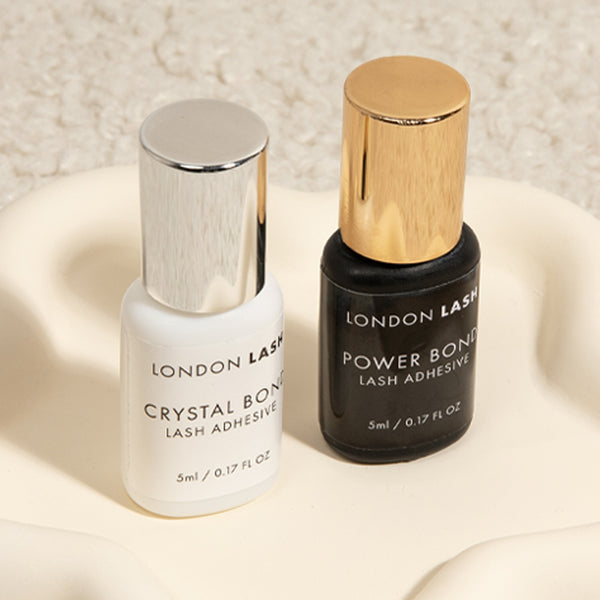
As per usual, we’ve got options for different working speeds and room conditions! Once you’ve checked the current ingredient information and treatment suitability, consider your experience, placement speed, temperature and humidity.
Use the individual product pages for current specifications. Ingredient exclusions, product performance and client suitability are separate considerations, so avoid choosing an adhesive on a single claim alone.

Satin Bond: A strong lash adhesive made for beginner and intermediate lash techs. It has a medium satin consistency and is suitable for classic and Russian volume lashes.
Lady Bond: One of our best sellers! A strong, reliable lash glue for classic and volume lashes. Check its recommended room conditions and drying time to see how it fits your working speed.
Crystal Bond: A strong, clear lash glue, ideal for brown lashes, colored lashes and lash art. It is formulated without Carbon Black pigment, but that does not make it allergy-free or automatically suitable for a client who has reacted to adhesive.
Power Bond: A strong adhesive with a fast drying time, suitable for advanced lash technicians. From classic to mega volume Russian lash sets, this adhesive could be your favorite companion when matched to the right working conditions.
Royal Bond: Made with advanced lash techs in mind, this strong adhesive is an option for low-humidity environments. It is suitable for classic and volume lashes; check the current product page for its recommended operating range.
Flexie: This strong lash glue has a velvety consistency and stays flexible after curing. From classic to volume lashes, advanced lash techs love this one! Check its recommended temperature and humidity before choosing it for your salon.
Latex-Free Lash Glue FAQs
Is Latex-Free Lash Glue Safe for Someone With a Latex Allergy?
A latex-free label addresses latex, but it does not establish that the complete treatment is suitable for someone with an allergy. Check the manufacturer’s ingredient information and consider other treatment materials too. Clients with a known allergy or a previous adhesive reaction need appropriate professional advice before treatment.
Can Latex-Free Eyelash Extension Glue Still Cause a Reaction?
Yes. Other ingredients may still cause irritation or an allergic reaction. Latex-free does not mean cyanoacrylate-free, and switching adhesives is not a reliable solution for a client with a previous adhesive allergic reaction.
How Do I Check Whether My Lash Glue Contains Latex?
Read the current ingredient information for the exact product you use and check the manufacturer’s documentation. If the information is unclear, contact the manufacturer for confirmation rather than relying on an older blog post or a general description of the range.
Discover our range of professional eyelash extension glues.
For more lashing tips about drying time, humidity and temperature, read our guide to finding the right lash glue for your working conditions!
Check out these featured products


